
Loading...
Serving Danbury, CT and surrounding areas. (475) 218-4243
A deck, addition, or structure is only as solid as what it sits on. Footings dug too shallow will move with every freeze-thaw cycle - and in Danbury, that means every winter.
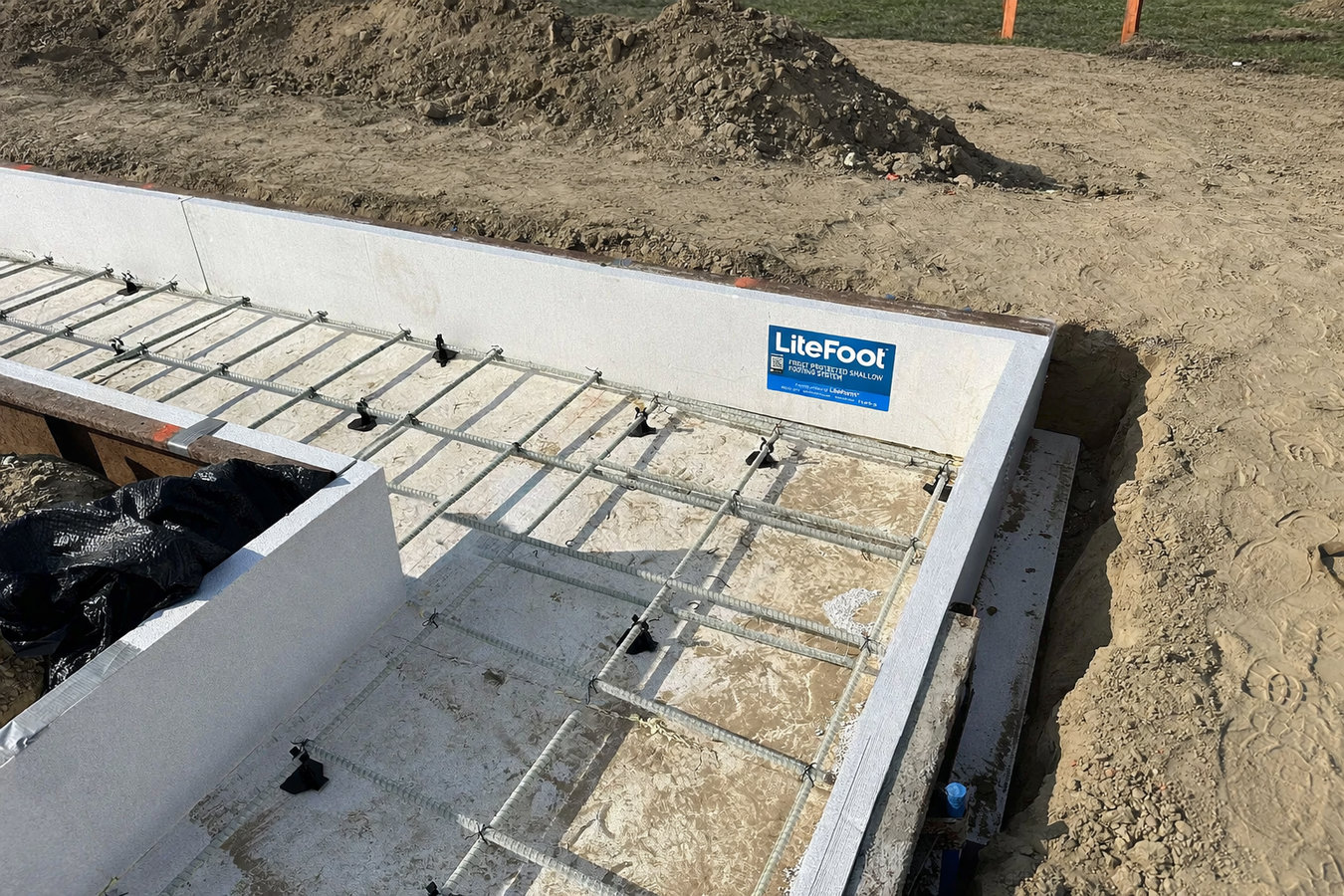
Concrete footings in Danbury are dug below the frost line - at least 42 to 48 inches deep - formed with rebar reinforcement, inspected by the city before the pour, and completed in one to two days once work begins. They are the buried base that keeps a deck, addition, porch, or outbuilding from shifting when the ground freezes and thaws each winter.
Most homeowners call us when they are planning a new deck or addition, or when they notice that an existing structure has started to tilt or crack. Concrete footings are not a visible part of a finished project, but they are the reason a structure stays level and safe for decades. If the footings were undersized or too shallow - common in older Danbury homes built before modern code requirements - the entire structure is at risk. Many projects that start as footing work connect naturally to broader foundation installation questions, and we are happy to look at the full picture during the estimate visit.
Getting the depth and size right - and having a city inspector verify it before concrete is poured - is the step that protects your investment for the life of the structure.
If your deck has developed a noticeable tilt or a post seems to be leaning away from the house, the footing beneath it may have shifted. In Danbury, this is often caused by a footing not buried deep enough to survive the freeze-thaw cycle. The ground freezes, pushes the footing up, thaws, and the footing settles in a slightly different position each year. Left alone, this movement will eventually make the deck unsafe.
Hairline cracks in concrete are common and often harmless, but wide cracks - especially diagonal ones or those where one side has shifted higher - can signal that the footing below has moved. Danbury's clay-heavy soils in some neighborhoods expand when wet and shrink when dry, putting repeated stress on footings not reinforced for that movement. If cracks are getting wider over time, a contractor should take a look.
Any new structure attached to or near your home needs proper footings before construction can begin. Danbury's building department will require it as part of the permit process - and skipping it means the structure will not pass inspection. Getting a footing assessment early helps you understand the full scope and cost before committing to a project.
When a footing shifts, the structure above it shifts too, and that movement often shows up first as doors or windows that suddenly stick or no longer latch. If this is happening near an addition, sunroom, or attached garage rather than in the main house, the footing supporting that structure may be the cause. This is a problem that tends to get worse over time, not better on its own.
We install footings for decks, covered porches, additions, detached garages, sheds, and accessory structures throughout Danbury. Every footing project begins with a site visit to assess the ground conditions, verify utility locations through Connecticut 811, and confirm what depth is required for the planned structure. We handle the City of Danbury permit application and coordinate the pre-pour inspection, so the concrete does not go in until the city has signed off. When a footing project is part of a larger structural job, we also connect it to any related foundation installation work so the entire below-grade scope is handled by one crew with one clear plan.
For properties where a new deck or patio needs footings and also involves a new surface area, we can incorporate the foundation raising scope or coordinate with a patio pour at the same time. Combining related concrete work into one mobilization saves time and money compared to scheduling separate crews for each phase.
Best for homeowners building a new deck, replacing an existing one, or adding a covered porch that needs code-compliant, frost-depth footings before framing begins.
Suited for additions, sunrooms, or detached garages where a continuous footing or isolated pads need to support the wall framing and pass a formal city inspection.
Right for older Danbury homes where mid-century footings were built too shallow for today's frost depth standards and are now causing visible movement in a deck or addition.
For sheds, workshops, and outbuildings where a properly buried footing keeps the structure level and stable through Danbury winters without the annual adjustments a surface-mounted base requires.
Connecticut's frost line sits at 42 to 48 inches below grade, and Danbury's inland elevation means the ground here freezes deeper and longer than in coastal areas. A footing that might hold up fine in a milder climate will heave, crack, and shift in Danbury if it is not buried well below that frost line. This is not a theoretical concern - it is the reason we see so many older structures in Danbury neighborhoods slowly tilting or cracking every year.
The soil throughout the region adds another layer of complexity. Danbury's glacially deposited terrain - rocky in some spots, clay-heavy in others - means excavation is rarely straightforward. Clay holds water and expands when it freezes, putting upward pressure on anything sitting above it. Rocky ledge can stop a standard excavator mid-dig. We regularly work in Hartford and Meriden where we encounter similar conditions, and the approach is the same: assess the ground before pricing, and plan for what you are likely to find rather than hoping the soil cooperates.
We visit the property, look at the site conditions, and give you a written estimate covering excavation, materials, and whether permit fees are included. We respond within one business day of your first contact.
We apply for the permit through the City of Danbury and contact Connecticut 811 to have underground utilities marked at least three days before any digging starts. You will see flags in the yard - that is normal and temporary.
We dig to the required depth - typically 42 to 48 inches in Danbury - set the forms, and place rebar. A city inspector visits to verify depth and dimensions before the pour begins. This step protects you as the homeowner.
Once the inspection is cleared, we pour and finish the footings. Plan for at least seven days before building on them - full strength takes about a month. We let you know exactly when the next phase of your project can begin.
Free on-site estimate. Permit and inspection handled by us. No pressure to commit.
(475) 218-4243Connecticut requires footings below the frost line, and in Danbury that means 42 to 48 inches. We never cut depth to save time - a footing that fails after two winters costs you far more than the price difference on the original job.
We manage the City of Danbury permit process and coordinate the pre-pour inspection ourselves. When your footing is on record with the city, it is documented proof that the work was done correctly - something that matters when you sell or refinance.
Hitting ledge or boulders during excavation is genuinely common in Danbury's glacially deposited neighborhoods. We plan for it upfront rather than presenting a surprise bill when the equipment hits rock at three feet. The Connecticut Geological Survey documents how widespread this rocky terrain is across Fairfield County.
We contact Connecticut 811 before every excavation project as a matter of course - not something we do only when reminded. Hitting a gas line or buried electrical cable is dangerous and expensive, and it is completely preventable with the required advance notice.
Footing work is invisible once a project is done, which is why homeowners sometimes treat it as a place to cut costs. We see the results of that approach every season - and we build footings the way they should be built the first time.
When an existing structure needs to be lifted and re-supported, foundation raising and footing work go hand in hand to bring the entire below-grade system up to current standards.
Learn moreFor new construction or full foundation replacement, we handle the complete below-grade scope - from footing design through poured walls - as a single coordinated project.
Learn moreFooting work in Danbury books out quickly once the ground thaws - reaching out now means you start your deck or addition project on time.