
Loading...
Serving Danbury, CT and surrounding areas. (475) 218-4243
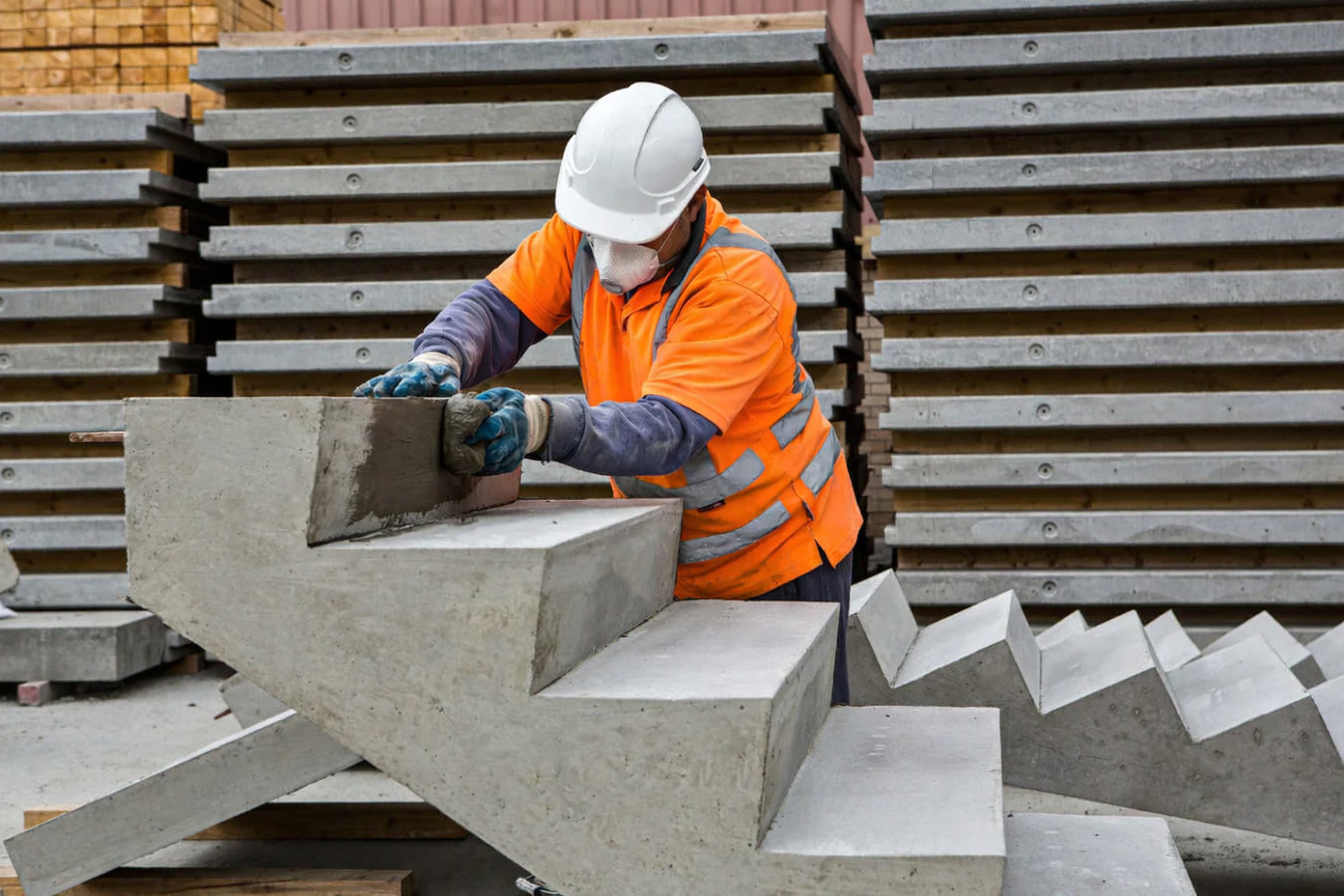
Crumbling, shifting, or cracked front steps are a safety risk. We pour new concrete steps in Danbury that hold up through Connecticut winters and look right on your home.
Concrete steps construction in Danbury covers demolition of the old steps, base preparation, forming, reinforced concrete pouring, and surface finishing - most residential jobs take one to two days of active work on your property. The steps cure over the following days and are typically ready for normal use within a week.
A large share of Danbury homes were built between the 1940s and 1970s. Steps from that era were often poured without internal reinforcement and with concrete mixes that predate today's standards. If your steps are showing cracks, spalling edges, or any rocking underfoot, waiting another winter will almost always make the damage worse. Some homeowners also combine step work with a new concrete sidewalk so the path from the street to the front door is replaced as one clean project.
We pull permits through the City of Danbury Building Department on every step replacement, so the finished work is inspected and properly documented.
These signs are visible from the front walk - no contractor visit needed to spot them.
If you can see cracks running from edge to edge - especially ones that have started to separate - your steps have likely been through too many Danbury winters without protection. Water gets into those cracks, freezes, expands, and widens the gap each season. Small cracks that are ignored tend to become structural breaks within a few more winters.
If any step shifts when you put your weight on it, or the whole staircase has started to lean away from the house, the base underneath has failed. This is a safety issue, not a cosmetic one. In Danbury's variable, rocky soil, base failure often starts gradually - you may notice a slight wobble that gets noticeably worse each spring.
Spalling - where the surface layer flakes or breaks away - is a sign the concrete has absorbed water and been damaged by repeated freezing. You will often see it first at the corners and edges of each step. Once spalling starts, it spreads, and patching rarely holds for more than a season or two in a Connecticut climate.
If you can see a gap opening between the top step and your door threshold, the steps are settling independently of the house. That gap lets water in right at the base of your home. Older Danbury homes - particularly those in neighborhoods like Elmwood and Germantown - are especially prone to this because original steps were often built without proper footings.
We build front entry steps, side entry steps, and rear access steps for Danbury homes. Most projects are full replacements - out with the old, in with the new - but we also build new steps where none existed before, such as when a homeowner adds a new door or converts a raised deck entry. Every set of steps we pour includes internal steel reinforcement, a compacted gravel base, and a broom-finish surface that provides traction when wet without feeling rough underfoot.
Many of our step projects connect to other concrete work at the same property. A new front staircase often pairs naturally with a slab foundation for a new addition, or with a full concrete sidewalk replacement that runs from the steps to the street. We coordinate those projects together so the finished surfaces match in color, texture, and elevation - rather than looking like they were done by different contractors at different times.
Best for homeowners replacing original steps on a home built before 1980, where the existing structure has deteriorated past the point of patching.
Best for new construction, home additions, or situations where an entry door is being moved or added and steps need to be built for the first time.
Best for homes with a raised entry or wide staircase where a flat landing at the top makes the entry safer and more usable in all weather.
Best for homeowners who want the steps to match a stamped patio or a decorative entry, with a surface that looks finished rather than utilitarian.
Danbury's inland location puts it in a colder pocket of Connecticut than towns along Long Island Sound. The freeze-thaw cycle here is more severe and more frequent - and it is the single biggest reason concrete steps crack and crumble years before they should. Water works into small pores or cracks during a warm spell, then expands when temperatures drop below freezing overnight. Repeat that process dozens of times each winter and even decent concrete starts to lose the battle. Steps on older Danbury homes face this every year without the internal reinforcement or surface sealing that would slow the damage. The American Concrete Institute's guidance on cold-weather concreting is clear on what it takes to pour steps that hold up in climates like Danbury's - and most steps built before the 1980s were not built to that standard.
Danbury's rocky, glacially deposited soil adds another layer of complexity. When our crew removes old steps, they often find the base beneath is uneven or built on top of large stones rather than compacted gravel. A good footing prep - the work no one sees once the job is done - is what separates steps that last 30 years from ones that start shifting after three winters. We serve homeowners throughout the area, including clients in Waterbury and New Haven who face the same freeze-thaw conditions and older housing stock as Danbury.
We reply within one business day. Here is what the process looks like from first call to finished steps.
We ask a few basic questions - how many steps, whether you are replacing existing ones or building new - and then schedule an in-person visit. We do not give firm prices over the phone, because the condition of the base and the access to your property both affect the cost.
After we assess the site, you receive a written, itemized estimate. Once you approve it, we pull the required permit from Danbury's Building Department before any work starts - you do not navigate that process yourself. This typically adds one to two weeks before the crew arrives.
The crew removes and hauls away your old steps, prepares the ground, and builds the wooden form for the new ones. We ensure you have another way into your home before the front steps are out - most homeowners use a side or back door for one to two days.
The concrete is poured and finished - light foot traffic after 24 to 48 hours, normal use within a week. A Danbury building inspector reviews the finished work before the permit is closed out, giving you documented proof the steps were built to code.
Danbury's construction season books up quickly in spring. We reply within one business day, visit your property in person, and give you a written price - no surprises at the end.
(475) 218-4243We place rebar or wire mesh inside every form before we pour. That internal reinforcement holds the concrete together if a crack ever develops - turning a potential structural break into a contained surface issue. Steps built in Danbury without reinforcement rarely make it through a decade of freeze-thaw cycles intact.
We visit every property before committing to a number. In Danbury's older neighborhoods, what is under the old steps matters - rocky soil, an uneven base, or a footing that was never properly built can all affect the scope and cost. You get an itemized written estimate after the visit, and that price does not change without your approval.
Danbury requires a permit for most step replacements, and we pull it on every project without exception. That means a city inspector signs off on the finished work - an independent check that your steps were built to code. The documentation also keeps your home's records clean, which matters at resale.
Homes in Elmwood, Germantown, and the streets around downtown Danbury present specific challenges - tight access, original footings that predate current standards, and soil that surprises you once the demolition starts. We have worked in these neighborhoods and know what to expect. Visit the Danbury Building Department to confirm current permit requirements for your project.
We take the guesswork out of a step replacement - written price, permitted work, inspected finish, and steps that match your home rather than looking like an afterthought.
Questions Danbury homeowners ask before booking a concrete steps project.
Connecticut requires home improvement contractors to be registered with the Department of Consumer Protection. Checking a contractor's registration takes about two minutes online and tells you whether their license is current.
Other concrete work we handle for Danbury homeowners.
Concrete slab foundations for additions, sheds, and new construction projects throughout Danbury.
Learn moreNew concrete sidewalks that connect your front steps to the street in one continuous, level path.
Learn moreEvery Danbury winter puts more pressure on steps that are already failing. Reach out now for a written estimate and a spot on our schedule before the spring rush fills up.