
Loading...
Serving Danbury, CT and surrounding areas. (475) 218-4243
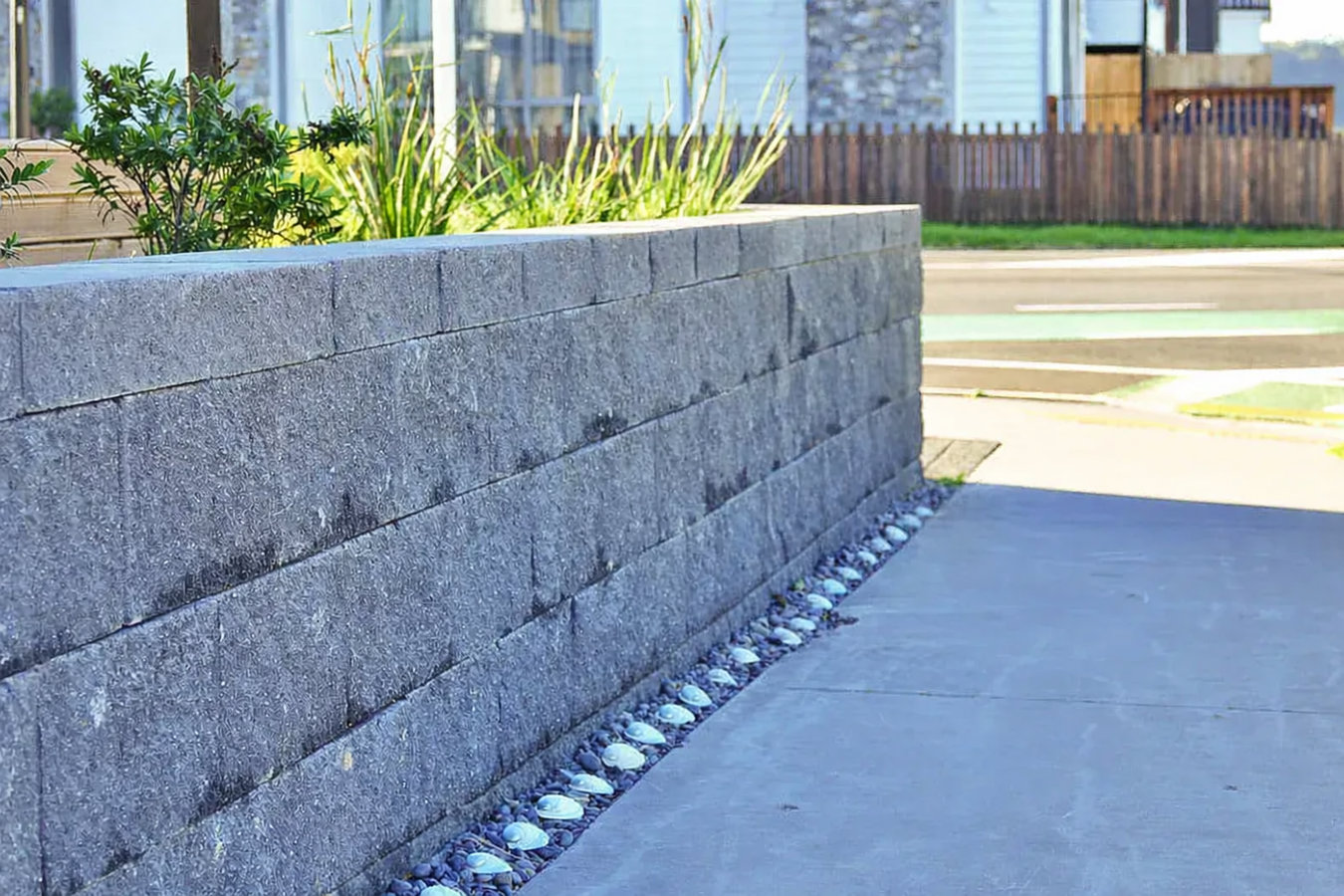
A sloped or eroding yard costs you usable space and puts your property at risk. We build walls that hold.
A sloped or eroding yard costs you usable space and puts your property at risk. We build walls that hold.
Concrete retaining walls in Danbury hold back soil on sloped or uneven properties, stopping erosion and creating stable, usable ground - most projects run two to five days of on-site work from excavation to final backfill. If your yard slopes toward your house, toward a neighbor, or down to a lower area you want to use, a properly built wall is the permanent fix.
A lot of Danbury properties sit on hilly terrain, and many homeowners deal with soil washing downhill every spring. That is not just a landscaping problem - it can pull away material from near your foundation over time. Concrete retaining walls designed for this area are built with drainage behind them and footings deep enough to handle the freeze-thaw cycles that stress every structure here each winter.
If you are also thinking about usable outdoor space, a tiered wall system can work alongside concrete steps to turn a steep backyard into a yard you can actually use.
If an existing wall tilts toward you or bows outward in the middle, the structure is under more stress than it was built to handle. In Danbury, this usually happens after a hard winter when freeze-thaw cycles push against a wall that lacked proper drainage behind it. A leaning wall will not correct itself and typically worsens each season.
If mulch, gravel, or topsoil migrates down your yard and collects at the base of a slope after heavy rain, your yard is eroding. Danbury's clay-heavy glacial soils hold water and release it quickly, which makes erosion here worse than on sandy ground. A wall stops that cycle permanently instead of requiring repairs every spring.
Small surface cracks are not always urgent, but horizontal cracks running across a wall signal that it is bending under soil pressure. If you mark crack ends with a pencil and they grow over the next few weeks, the wall needs professional attention soon. Catching this early is far less expensive than waiting until the wall begins to fail.
If your yard slopes toward your house, rainwater and snowmelt can collect against the foundation. Over time, that moisture works its way into basements and crawl spaces. Many Danbury homeowners on hillside lots discover this connection only after dealing with repeated basement dampness - a retaining wall combined with proper grading redirects that water away.
We build two main types of concrete retaining walls for residential properties in Danbury. Poured concrete walls are formed and poured as a single solid structure - they are the strongest option for taller walls or sites where the ground is heavily loaded. Concrete block walls use individual masonry units that interlock to create a stable, attractive face. Both include drainage aggregate and perforated pipe behind the wall, which is non-negotiable for surviving Danbury winters.
Many Danbury properties also benefit from tiered wall systems, where two or more walls at different elevations create flat, usable terraces on a steep lot. This approach pairs naturally with concrete floor installation when a patio slab is part of the plan, and with concrete steps to connect the levels. We discuss which system fits your site, your goals, and your budget during the on-site estimate visit.
Best suited for taller walls, heavily loaded sites, or homeowners who want maximum strength in a single solid structure.
A strong, attractive option that suits most residential heights and allows for more surface finish variety than poured concrete.
Ideal for steep hillside lots where a single wall is not enough - creates multiple flat terraces for gardens, patios, or play areas.
The right choice for any wall near a foundation or a drainage-sensitive area - includes gravel backfill and perforated pipe to control water.
Danbury sits on hilly, wooded terrain with rocky glacial soil - the kind that erodes quickly on slopes and creates drainage problems that flat suburban yards never see. Frost depth in this part of Connecticut can push down 36 to 42 inches, which means any wall without footings below that line will shift over the first few winters. Danbury also receives around 50 inches of precipitation per year, and the spring snowmelt alone puts significant pressure on anything holding back soil on a hillside property. We size footings and drainage for those specific conditions, not a generalized New England average.
A lot of the homes we work on near Waterbury and Norwalk already have aging timber or railroad-tie walls from the 1970s and 1980s that are past their useful life. Replacing them with concrete before they fail is almost always less expensive than dealing with the erosion and cleanup after they give way. For homeowners in Danbury's older hillside neighborhoods, this is often one of the more urgent maintenance projects on the list.
We visit the site before quoting anything - retaining wall prices vary too much by slope, soil, and drainage to give a reliable number over the phone. You will hear back within one business day to schedule a time.
We handle the Danbury building permit for you. Approval typically takes a few weeks - we build that window into your project schedule so there are no surprises about when the crew shows up.
The crew excavates to a stable base, builds the wall, and installs gravel backfill with perforated drain pipe before any soil goes back in. This drainage layer is the step that determines whether the wall holds for decades or starts leaning within a few winters.
Soil is added in layers and compacted - not dumped in all at once - to avoid uneven pressure on the new wall. We leave the site clean and walk you through the curing window and any care instructions before the crew leaves for the final time.
No phone guesses. We visit your yard, assess the slope and soil, and give you a written number you can plan around.
(475) 218-4243Connecticut frost depth in the Danbury area can reach 36 to 42 inches. Every wall we build has footings below that level so the freeze-thaw cycles do not push the structure out of position year after year. This is a detail that separates a wall lasting 40 years from one that starts leaning in five.
Water pressure is the most common reason retaining walls fail. We install granular backfill and a perforated drain pipe behind every wall we build - not as an upgrade, but as a standard part of the job. Ask us to walk you through exactly where the drainage goes before work starts.
We pull the Danbury building permit as part of every qualifying project - you do not have to chase us for it. That means a city inspector reviews the work at key stages, which is a benefit to you, not just a formality. You can verify any contractor's HIC registration at elicense.ct.gov.
Danbury's glacial till can hide ledge rock and boulders at excavation depth, which can affect both cost and timeline. We have worked in enough yards in this area to plan around it and be upfront with you when the ground presents surprises - before your price changes, not after.
Taken together, these details mean you are getting a wall built for Danbury specifically, not a generic concrete structure dropped onto a Connecticut hillside. Call us or use the contact form to schedule your on-site visit. For more on industry standards, the National Concrete Masonry Association publishes technical guidance on residential retaining wall systems.
Pour a new basement or garage slab that is level, moisture-protected, and built to handle Danbury's freeze-thaw winters.
Learn moreConnect the levels created by tiered retaining walls with solid concrete steps designed to hold up through hard Connecticut winters.
Learn moreSpring slots fill fast - reach out now to lock in your estimate before the season books up.